


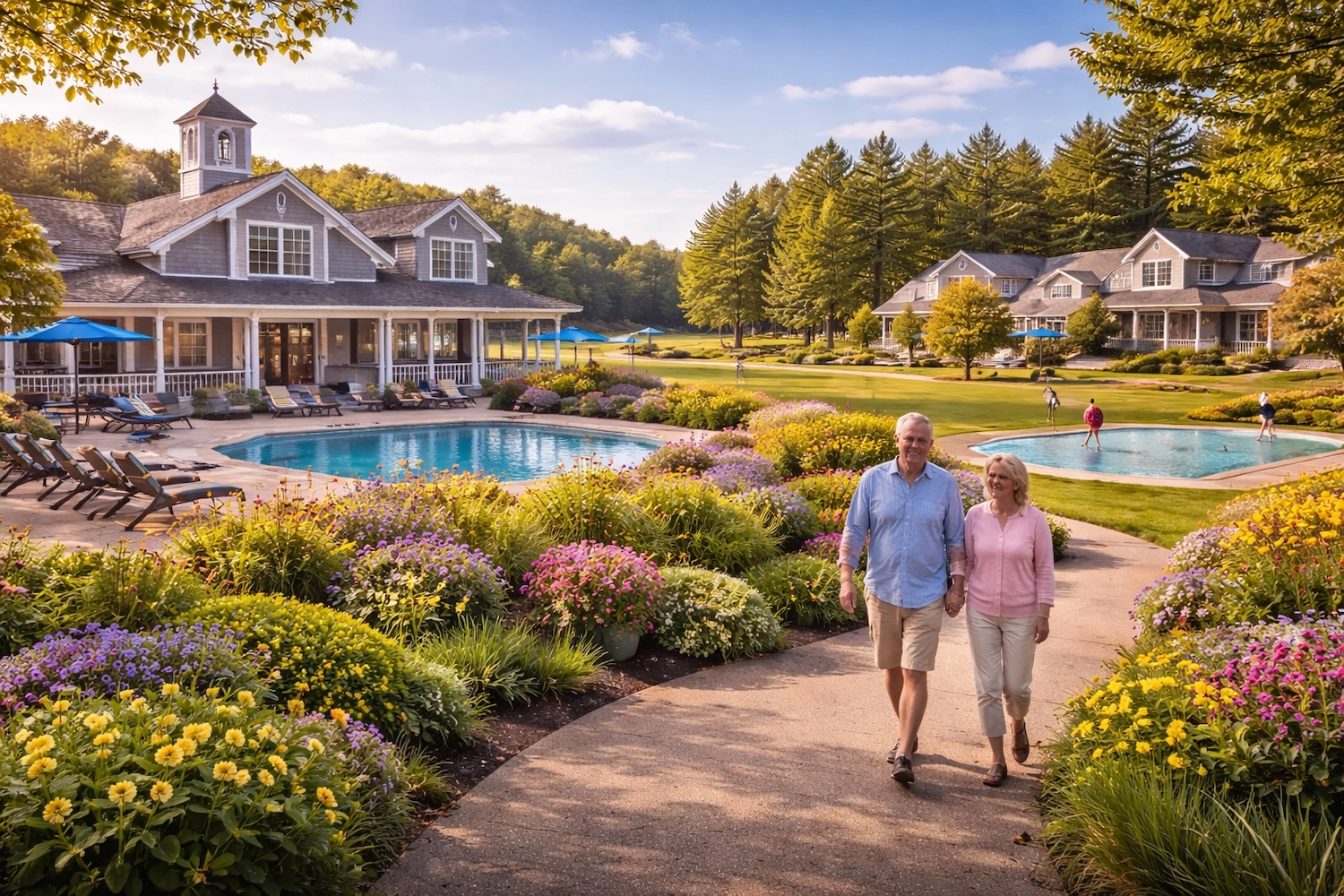
55+ Communities in New Hampshire: Amenities, Fees, and Resale Value
New Hampshire has emerged as one of America’s premier retirement destinations, offering affluent downsizers, retirees, and empty nesters an unparalleled combination of tax advantages, natural beauty, and sophisticated active adult communities. With no state income tax, no sales tax, and the complete elimination of the interest and dividends tax as of January 2025, the Granite State provides an exceptionally tax-friendly environment for retirement living. This comprehensive guide examines the active adult communities across New Hampshire, analyzing their amenities, costs, investment potential, and the broader market dynamics shaping retirement living in New England for 2025 and beyond.
The New Hampshire Advantage: Why 55+ Communities Thrive Here
Unmatched Tax Benefits for Retirees
New Hampshire stands as one of only a handful of states with no personal income tax—a benefit that remains exceptionally valuable for retirees. As of January 1, 2025, the state completed the full repeal of its 3% tax on interest and dividends, eliminating what was historically its primary tax on investment income. This comprehensive tax structure creates an exceptionally favorable environment for retirees who rely on Social Security, pension income, 401(k) distributions, investment returns, and other retirement income sources.
The practical implications are substantial. A retired couple with $100,000 in annual dividend income would pay approximately $3,000 in taxes in states with standard interest and dividend taxation. In New Hampshire, they pay $0. This advantage compounds over time, allowing retirees to preserve and grow their wealth more effectively than in higher-tax states.
Unlike many other states, New Hampshire does not tax any form of retirement income, including Social Security benefits, pension payments, IRA distributions, and annuity income. This creates a genuinely tax-free retirement environment for income-generating retirees. The state’s tax advantages extend beyond income taxation. New Hampshire imposes no inheritance tax, meaning beneficiaries do not pay taxes on inherited assets—a significant consideration for legacy planning.
The state does impose an 8.5% tax on restaurant meals and hotel accommodations, and there are selective taxes on specific items like tobacco and alcohol. However, for daily purchases of groceries, clothing, and most goods, there is no sales tax. Combined with no income tax, this creates one of the lowest overall tax burdens among all U.S. states for retirees.
Property Tax Considerations and Senior Relief Programs
While New Hampshire’s lack of income and sales taxes is attractive, prospective residents must understand the property tax landscape. New Hampshire maintains some of the highest property tax rates in the nation, with an average effective rate of 1.61% of home values. For a home valued at $535,000—the 2025 median in the state—this translates to approximately $8,614 in annual property taxes, substantially higher than the national average of approximately $1,900 annually.
However, several municipal and state programs help offset this burden for senior residents. The Elderly Exemption Program, available in most New Hampshire municipalities, provides significant relief for qualifying residents. Eligibility criteria and exemption amounts vary by municipality, but general parameters include:
- Age requirement: Residents must be 65 years or older
- Residency requirement: Must have resided in New Hampshire for at least three years and owned the home prior to April 1 of the tax year of application
- Spousal requirement: If property is owned by a spouse, the couple must have been married for at least five years
- Income limits: Vary by municipality but typically range from $45,000 to $65,000 annually for married couples, with lower limits for single applicants
Exemption amounts are tiered by age. For residents aged 65–74, a typical exemption is $175,000 of assessed value; for those 75–79, approximately $225,000; and for residents 80 or older, approximately $275,000. On a property assessed at $535,000, a resident age 80+ might reduce their taxable value to $260,000, reducing annual property taxes from $8,614 to approximately $4,186—a reduction of over 50%.
Additional programs include the Low & Moderate Income Property Tax Relief for homeowners with household income of $37,000 or less (single) or $47,000 or less (married couples). Application deadlines typically fall in April or May, varying by municipality.
Geographic and Lifestyle Appeal
New Hampshire’s appeal extends far beyond tax benefits. The state offers four distinct seasons, from spectacular fall foliage that attracts millions of visitors annually, to pristine winter landscapes suitable for skiing and snowshoeing, to mild spring and summer weather ideal for outdoor recreation. The state provides genuine seasonal living rather than monotonous year-round warmth.
The geographic location provides significant advantages. New Hampshire sits within 2 hours of Boston, Massachusetts; 3 hours of Hartford, Connecticut; and reasonable driving distance to New York City. This proximity allows residents to access major metropolitan cultural amenities, world-class healthcare facilities, and family connections while maintaining a peaceful, rural atmosphere. The state’s natural geography includes the White Mountains, numerous pristine lakes, river valleys, and protected forestland comprising approximately 87% of the state’s land area.
The cost of living in New Hampshire, while higher than the national average, remains significantly lower than neighboring Massachusetts, Connecticut, and Rhode Island. Combined with the tax advantages, the overall financial burden of retirement living in New Hampshire is considerably lighter than in surrounding New England states.
Current Market Overview: 55+ Communities in New Hampshire for 2025
Community Landscape and Distribution
New Hampshire features approximately 73 established active adult communities, with smaller developments containing 15 homes and larger communities reaching 189 homes. The average community size remains modest at approximately 63 homes per community, creating the intimate, tight-knit neighborhoods that many active adults prefer over sprawling mega-developments.
Communities are concentrated in southern New Hampshire, particularly in Hillsborough and Rockingham counties, offering convenient access to I-89 and I-93 corridors. This geographic concentration provides residents with easy access to healthcare facilities, shopping, dining, and cultural amenities while maintaining proximity to rural New England character.
Notable geographic concentrations include communities in and around:
- Epping and surrounding areas: Southern Rockingham County, convenient to Seacoast region and retail centers
- Bedford and Amherst corridor: Central southern New Hampshire, between Nashua and Manchester, providing excellent access to major employers and healthcare
- Bow and Brentwood: Central New Hampshire locations between Concord and Manchester
- Fremont and surrounding communities: Close proximity to Exeter’s medical facilities and rural character
- Grantham and Lakes Region: Central and northern communities near the Dartmouth-Lake Sunapee region offering mountain and lake access
Pricing and Current Market Dynamics
The 55+ real estate market in New Hampshire reflects broader state housing trends while demonstrating unique characteristics specific to active adult communities. Recent market data reveals:
Statewide single-family home pricing: The median price of a single-family home in New Hampshire reached $535,000 in 2025, representing a 3.9% year-over-year increase. By November 2025, pricing had increased 4.5% from October 2024 levels. These gains represent the slowest pace of price growth in a decade, indicating a market transition toward greater balance after years of rapid appreciation.
55+ community pricing premium: Homes in established active adult communities historically command prices 5–6% higher than comparable non-HOA homes, reflecting the premium buyers place on maintenance-free living and community amenities. This pricing advantage reflects strong and consistent demand from retiring baby boomers.
Market absorption rates: Properties in 55+ communities typically remain on the market for approximately 104 days, compared to the statewide average of significantly less time. This longer absorption period reflects the specialized nature of the market segment and the smaller pool of qualified buyers compared to the general market.
Inventory levels: As of late 2025, New Hampshire maintained approximately 2 months of housing inventory, well below the 5–7 months considered balanced. However, 2025 saw construction reach a 20-year high with more than 5,800 housing units constructed, suggesting potential inventory improvement for 2026.
Market activity: In December 2025, 33.7% of homes in New Hampshire sold above list price, down 4.9 percentage points year-over-year. Meanwhile, 14.6% of homes experienced price reductions, suggesting a market in transition toward greater buyer negotiating power compared to previous years.
Premier 55+ Communities: A Detailed Regional Analysis
Newly Developed Communities
Canterbury Commons (Epping): Among New Hampshire’s newest 55+ communities, Canterbury Commons represents the evolution of active adult community design. This development features modern, accessible design principles that accommodate changing mobility needs without requiring residents to relocate. The community emphasizes walkability, with most residents able to reach common areas and social spaces within short distances. Modern construction standards ensure energy efficiency, reducing utility costs for residents.
The Cliffs at Evergreen: One of the most recent community developments in the state, The Cliffs at Evergreen offers contemporary design and premium amenities for discerning active adults. The community reflects current national trends in aging-in-place design, with single-story living options, accessible architectural features, and integrated technology throughout common areas and residential units.
The Villages at Three Ponds: A newer development providing multiple home styles and community amenities, The Villages at Three Ponds offers residents choice in housing types while maintaining a cohesive community aesthetic. The development includes both attached and detached home options, allowing prospective residents to select configurations matching their lifestyle preferences.
Established Southern New Hampshire Communities
Summerfield of Amherst: Located on 58 acres of rolling countryside near the Peacock River, Summerfield of Amherst represents the established luxury active adult community model. Positioned between Nashua and Manchester in Hillsborough County, the community offers five unique floor plans with attached garages and modern amenities. The expansive grounds provide extensive walking trails and natural areas, appealing to active adults prioritizing outdoor recreation.
Riverwalk at Bedford: Riverwalk at Bedford exemplifies high-end active adult community design, offering both two-floor open loft homes and single-floor living options accommodating diverse mobility and lifestyle preferences. The community features contemporary architecture, premium finishes, and extensive shared amenities. Located in a desirable bedroom community between Boston and Manchester, Riverwalk attracts affluent downsizers valuing both convenience and quality.
The Mews at Bedford: The Mews at Bedford represents premium, gated active adult living. The community features private courtyards for each residence, oversized windows maximizing natural light and views, mahogany decks, and controlled gated access providing security and privacy. The architectural design emphasizes open floor plans with attention to detail and finish quality that appeal to discerning homeowners.
Governor’s Forest (Fremont): Strategically located minutes from Exeter’s medical facilities, Governor’s Forest appeals to active adults prioritizing healthcare accessibility. The community offers four distinct home styles, each featuring maintenance-free living with professional exterior maintenance, landscaping, and common area management. Fremont’s location provides rural character while maintaining proximity to essential services.
Central New Hampshire Communities
Stone Sled Farm (Bow): Located in Bow between Concord and Manchester, Stone Sled Farm offers several home styles with convenient highway access to both central New Hampshire and the Boston region. The community name reflects the area’s historic agricultural heritage, and the property features extensive landscaping, nature trails, and community spaces supporting active outdoor recreation.
Mill Pond Crossing (Brentwood): Mill Pond Crossing features spectacular two-story and two-bedroom homes in a heavily wooded setting, offering residents both affordability and natural aesthetics. The Brentwood location provides access to Seacoast region amenities while maintaining the character of central New Hampshire. The heavily wooded setting provides privacy and natural recreation opportunities.
The Eastman Community Association (Grantham): The Eastman Community Association in Grantham represents the pinnacle of active adult and retirement living in New Hampshire. This sustainable, intergenerational community in the Dartmouth-Lake Sunapee Region is designed as a nature-lover’s haven, encouraging an active and connected lifestyle through four distinct seasons. The community encompasses approximately 4,300 acres with extensive hiking trails, lake access, and outdoor recreational opportunities. Eastman welcomes residents of all ages, creating a true multigenerational community model increasingly favored by contemporary retirees.
Premium Gated Communities
Approximately 1.4% of New Hampshire’s 55+ communities are gated, reflecting the state’s generally lower crime rates and more open community models. Oak Ridge Estates, featuring 101 homes, represents the gated community category. These exclusive communities typically command premium prices reflecting the enhanced security perimeter, limited access points, controlled traffic patterns, and perceived privacy benefits. Gated communities appeal particularly to affluent retirees prioritizing security and those accustomed to gated communities in their previous residences.
Amenities: What to Expect in New Hampshire's 55+ Communities
Standard Community Amenities
Most New Hampshire 55+ communities include foundational amenities supporting active lifestyles and community engagement:
- Clubhouses: Central gathering spaces for community events, socializing, guest accommodations, and programmed activities
- Fitness centers: State-of-the-art exercise equipment, free weights, and group fitness facilities
- Walking trails: Maintained pathways throughout communities, ranging from casual walks to more challenging hiking routes
- Landscaped common areas: Professional maintenance of shared spaces including gardens, seating areas, and recreational fields
- Community pools: Both indoor and outdoor swimming options, often heated for extended seasonal use
- Outdoor recreational facilities: Typically including bocce courts, horseshoe pits, shuffleboard, and lawn bowling areas
- Social programming: Regular events including dinners, entertainment, educational seminars, and seasonal celebrations
Premium Amenities in Higher-End Communities
Higher-tier 55+ communities may offer expanded amenities appealing to active adults seeking resort-style living:
- Golf courses: On-site or immediately adjacent championship courses with practice facilities and golf instruction
- Tennis facilities: Both indoor and outdoor courts, often with professional instruction and organized leagues
- Spa and wellness services: On-site or affiliated massage therapy, aesthetics, personal training, and health coaching
- Arts and crafts studios: Dedicated spaces for painting, pottery, woodworking, jewelry making, and other creative pursuits
- Library and reading rooms: Quiet spaces featuring curated collections, digital resources, and study areas
- Concierge services: Assistance with travel planning, restaurant reservations, ticketing, and arrangement of specialized services
- Computer facilities: Technology centers with high-speed internet, printing capabilities, and tech support
- Dining facilities: In-community restaurants or affiliated dining options offering prepared meals and catering services
New Hampshire-Specific Amenities
Communities throughout the state capitalize on regional assets and natural features:
- Lake access: Communities near New Hampshire’s 1,000+ lakes offer boating, fishing, kayaking, and water recreation programs
- Mountain access: Properties with mountain views or proximity to the White Mountains, offering hiking opportunities and scenic beauty
- Seasonal programming: Winter activities including cross-country skiing and snowshoeing; spring and fall hiking; summer outdoor concerts and water activities
- Nature centers: Some communities maintain naturalist programs, bird watching opportunities, and environmental education
- Maple syrup and agricultural programs: Reflecting New Hampshire’s heritage, some communities host farm-to-table dining, agricultural demonstrations, and harvest celebrations
Understanding Fees and Ongoing Costs in 55+ Communities
Homeowner Association Fees and Coverage
Homeowner Association (HOA) fees in New Hampshire 55+ communities can range up to $800 per month, though many communities maintain substantially lower fees. These fees vary significantly based on community size, amenity offerings, location, and age of development.
Typical fee structures in comparable communities range from $322.80 to $368.25 per month, though premium communities with extensive amenities or newer developments may exceed these ranges. For context, a $350/month fee equals $4,200 annually; $500/month equals $6,000 annually.
Standard HOA fees typically cover:
- Exterior home maintenance: Roof repairs, siding maintenance, gutter cleaning, and exterior painting
- Landscaping and grounds keeping: Professional lawn care, shrub maintenance, tree service, and seasonal cleanup
- Common area utilities: Electricity, water, and gas for clubhouses, fitness centers, and outdoor facilities
- Trash and recycling collection: Weekly residential collection and disposal services
- Snow removal: Clearing and salting of community roads, driveways, parking areas, and common spaces—essential in New Hampshire’s climate
- Basic security services: Gate monitoring, routine patrols, or electronic security systems
- HOA administration: Management personnel, accounting, legal services, and community governance
Premium fee structures in higher-amenity communities additionally cover:
- Fitness center operations: Equipment maintenance, facility staffing, and programming
- Pool maintenance and operations: Professional chemistry management, lifeguards, and seasonal opening/closing
- Activity programming: Event coordination, entertainment, educational seminars, and social events
- Concierge services: Staff availability for travel planning, restaurant reservations, and service coordination
- Enhanced security: 24/7 manned gates, roving patrols, and advanced surveillance systems
- Golf course maintenance: Landscaping, grounds keeping, equipment, and professional staff
Fee Structure Factors
HOA fees vary based on several variables:
- Community size: Larger communities spread fixed costs across more residents, potentially reducing per-household fees
- Amenity level: Golf courses, extensive spa services, and premium fitness facilities increase costs significantly
- Age of community: Newer communities may impose higher fees to build capital reserves for future repairs and replacements
- Geographic location: Seacoast communities and those near major employment centers often maintain higher fees
- Property condition: Communities with deferred maintenance may require higher fees to address accumulated repairs
- Service contracts: Communities using high-end management companies, professional landscapers, and specialized services maintain higher fee structures
Additional Costs Beyond HOA Fees
Special assessments: HOAs may collect additional funds beyond regular fees for special projects including road repaving, parking area reconstruction, dock replacements, clubhouse renovations, or equipment replacement. While these can represent significant one-time expenses (ranging from $2,000 to $10,000 or more), they often increase property values by addressing deferred maintenance or upgrading amenities.
Utility costs: Individual utility costs for electricity, water, natural gas, and septic system maintenance remain the homeowner’s responsibility and are not covered by HOA fees. In New Hampshire, annual residential utility costs average approximately $2,500–$3,500 depending on home size, efficiency, and heating fuel choice.
Optional services: Many communities offer optional à la carte services not included in base HOA fees. These may include transportation services ($50–$150/month), additional fitness classes or personal training ($100–$300/month), golf club memberships ($1,000–$3,000 annually), spa services ($50–$150 per service), and dining programs ($200–$500/month).
Property taxes: Property taxes remain a significant financial consideration. The typical New Hampshire homeowner pays approximately $6,097 to $8,600 annually in property taxes depending on municipality and home value. However, senior exemptions can provide substantial relief—potentially reducing taxable value by $175,000–$275,000 depending on age and municipality.
Total Cost of Ownership Example
A homeowner in a 55+ community with a $535,000 home value might face:
- HOA fees: $350–$500/month ($4,200–$6,000 annually)
- Property taxes (before senior exemption): $8,614 annually
- Property taxes (with age 80+ exemption): $4,186 annually
- Utilities: $2,500–$3,500 annually
- Homeowners insurance: $1,200–$1,500 annually
- Total annual housing costs: approximately $12,086–$15,186 before optional services
Resale Value and Investment Potential
Market Performance and Value Appreciation
New Hampshire’s 55+ communities have demonstrated resilience and appreciation potential in the current market environment. Recent market performance data reveals:
Price appreciation trends: New Hampshire home values increased 3.9% in 2025, with statewide median home prices reaching $535,000. Active adult communities often outperform the general market due to consistent demand from retiring baby boomers and the limited supply of new community development.
HOA community premium: Properties in HOA-governed communities typically sell for 5–6% more than comparable homes outside HOA structures, reflecting buyer recognition of the value provided by professional management, maintenance-free living, and community amenities.
Market stability: While inventory remains constrained with only 2 months of supply available, the 55+ segment benefits from demographic tailwinds ensuring steady demand from retiring baby boomers for decades to come.
Factors Supporting Strong Resale Values
Demographic trends: The continuing wave of baby boomer retirements ensures steady, predictable demand for quality 55+ communities. The youngest baby boomers were born in 1964; the oldest turn 82 in 2026. Peak retirement years remain ahead, with millions of boomers reaching traditional retirement ages through 2030. This demographic shift, combined with New Hampshire’s enhanced tax advantages following the 2025 dividend tax repeal, creates a favorable long-term outlook for property values.
Limited supply: With approximately 73 communities and predominantly small-scale developments averaging 63 homes per community, supply constraints are significant. New Hampshire currently maintains only 2 months of housing inventory overall, well below the 5–7 months considered balanced. Limited supply of quality active adult communities ensures property values benefit from scarcity.
Quality of life premium: Communities offering superior amenities, professional management, and prime locations command premium pricing and maintain stronger resale values. The intangible value of community, social engagement, and active programming creates emotional attachment that translates to pricing power.
Maintenance-free living value: As the oldest baby boomers age into their 80s, the value of maintenance-free living intensifies. Buyers in their 70s and 80s increasingly prioritize communities handling exterior maintenance, lawn care, and roof management, creating strong demand for established communities with proven management.
Tax advantage sustainability: The 2025 repeal of New Hampshire’s interest and dividend tax removes the last significant income tax in the state. This permanent structural advantage makes New Hampshire properties increasingly attractive relative to higher-tax states, supporting long-term value appreciation.
Investment Considerations and Risk Factors
Advantages:
- Consistent, predictable demand from retiring baby boomers through 2040
- Sustainable tax advantages attracting affluent buyers from surrounding high-tax states
- Limited new supply supporting property values
- Professional management maintaining community standards and resident satisfaction
- Potential for strong long-term appreciation as demand outpaces supply
- HOA premium pricing reflecting buyer appreciation of convenience and community value
Considerations and risks:
- Age-restricted communities have smaller buyer pools compared to unrestricted properties
- High property taxes, despite senior exemptions, may deter some buyers
- Market demand dependent on health of retirement demographic and economic conditions
- Potential special assessments for major repairs or amenity upgrades
- Rising HOA fees over time as operational costs increase
- Climate risks including winter storms, ice events, and flooding in some areas
- Healthcare facility changes or consolidations affecting nearby communities
Market Outlook 2025–2030
The outlook for New Hampshire’s 55+ communities remains positive, driven by multiple favorable factors:
Continued baby boomer retirements: Peak retirement years are still ahead, with approximately 10,000 Americans reaching traditional retirement age each day. Baby boomer longevity means retirement periods extending 30+ years, requiring stable, professional community management.
Tax policy permanence: The 2025 elimination of interest and dividend tax creates a permanently enhanced tax advantage relative to surrounding states. This structural advantage is unlikely to be reversed due to political and budgetary considerations.
Healthcare infrastructure: New Hampshire maintains excellent healthcare facilities including Dartmouth-Hitchcock Medical Center (a top-tier academic medical center), Elliot Hospital in Manchester, and regional hospital systems. Continued investment and expansion support retirees’ healthcare needs.
Infrastructure investment: The 2025 record construction of 5,800 housing units suggests pipeline improvements for housing supply. However, active adult communities remain specialized products, ensuring continued supply constraints in this segment.
Climate migration: New England’s moderate four-season climate increasingly attracts retirees from regions facing climate extremes. Hurricanes in the Southeast and Southwest heat extremes position New Hampshire as a climate-stable retirement destination.
Technology adoption: Newer communities incorporating smart home features, high-speed broadband, and digital services appeal to tech-savvy boomers. This trend supports both property values and resident satisfaction.
National Trends in Active Adult Communities: How 55+ Living is Evolving
Aging in Place and Home-Based Services
National research indicates that the majority of older adults wish to age in place in their own homes and communities, driving innovation in community-based services. Boomers increasingly prefer to maintain independence within professional communities rather than transitioning to assisted living or skilled nursing facilities. This preference drives design features including:
- Single-story living options with accessible architectural features
- Universal design principles accommodating mobility variations
- Integrated healthcare and wellness services within or adjacent to communities
- Home delivery services, meal programs, and housekeeping options
- Visiting nurse and telehealth services available to residents
National senior living occupancy reached 88.7% in Q3 2025, with independent living at 90.2% and assisted living at 87.2%. Industry forecasts predict occupancy rates will exceed 90% by end of 2026, indicating strong demand across senior housing segments.
Housing Product Diversification
As the oldest baby boomers turn 80 in 2026, senior housing developers are diversifying product types beyond traditional active adult communities. Current trends include:
Single-story cottages and villas: Developers increasingly offer single-story housing with attached garages, reflecting preference for homes without stairs. These products complement or replace multistory units in many developments.
Independent living lite (IL Lite) communities: Hybrid communities blend active adult and independent living concepts, offering residents the option to age in place from active adult living through light personal care services.
Multigenerational and mixed-age communities: Multiage communities are growing nationally, featuring residents of all ages alongside accessible transit and shared housing models. These communities design shared spaces including cafes, gardens, coworking hubs, and recreation areas creating organic connections across generations.
The Eastman Community Association in New Hampshire exemplifies this national trend, actively welcoming residents of all ages in an intergenerational community model.
Technology Integration and Smart Communities
Baby boomers are more comfortable with technology than prior generations of retirees, expecting internet capability, digital services, and smart home features as standard. Current technology trends in 55+ communities include:
- High-speed broadband: Gigabit-capable internet for video conferencing, streaming, and digital entertainment
- Smart home technology: Voice-activated controls, smart thermostats, automated lighting, and security systems
- Health monitoring devices: Sensors and microprocessors in appliances, furniture, and wearables collecting health data and recognizing risk patterns
- Digital concierge services: Mobile apps and online platforms coordinating activities, dining reservations, and service requests
- Telehealth integration: Professional healthcare providers accessible via video consultation within communities
- Activity management platforms: Digital calendars and registration systems for social and fitness programming
Communities implementing comprehensive technology infrastructure increasingly attract affluent, active retirees valuing connectivity and modern conveniences.
Wellness and Holistic Health Focus
Wellness in senior living has shifted from programmatic offerings to an essential component of community design. Modern communities prioritize holistic well-being encompassing physical health, mental wellness, and emotional engagement. Specific trends include:
- Fitness evolution: Beyond traditional exercise equipment, communities offer functional fitness, fall-prevention training, balance classes, and flexibility programs addressing age-specific health concerns
- Mental health services: Resident counseling, depression screening, cognitive engagement programming, and social connection initiatives
- Nutritional programming: Farm-to-table dining, nutritionist consultations, cooking classes, and specialized meal options for health conditions
- Outdoor recreation: Walking trails, gardening opportunities, nature programs, and climate-appropriate outdoor activities
- Sleep wellness: Education programs and environmental design supporting quality sleep
- Social connection: Structured programs ensuring resident engagement, reducing isolation, and promoting community bonds
Sustainability and Environmental Design
Newer communities increasingly incorporate energy-efficient design and sustainable practices, appealing to environmentally conscious retirees. Green building features include:
- ENERGY STAR certified homes and common area buildings
- Solar panels for electricity generation and hot water heating
- Geothermal heating and cooling systems
- Water conservation features including low-flow plumbing fixtures and rainwater harvesting
- Native plant landscaping reducing maintenance and irrigation needs
- Electric vehicle charging infrastructure throughout communities
- Waste reduction and recycling programs
Comparison with Other Retirement Destinations
New Hampshire Versus Surrounding States
Versus Massachusetts: While Massachusetts offers excellent healthcare and cultural amenities, the state imposes significant income taxes (5.1% on most income) and substantial property taxes (1.23% average). New Hampshire’s tax advantage is substantial for retirees. Massachusetts’ cost of living also exceeds New Hampshire’s, particularly regarding housing prices and property taxes.
Versus Maine: Maine offers natural beauty similar to New Hampshire but imposes income tax (5.8% on most income) and higher property taxes in many areas. New Hampshire’s superior tax position and proximity to Boston and Hartford provide competitive advantages for active adults valuing cultural amenities and family access.
Versus Vermont: Vermont’s income tax reaches 8.75% on income, substantially higher than New Hampshire. While Vermont offers similar natural beauty and outdoor recreation, New Hampshire’s tax advantages make it more attractive for retirement. Vermont’s active adult community options are also more limited.
Versus Florida and Sunbelt states: Florida and Sunbelt states offer no state income tax and warm year-round climate. However, these states face hurricane risk, heat extremes, and rapid development changing their character. New Hampshire’s moderate climate provides four seasons appealing to many retirees, no hurricane risk, and cultural/healthcare access superior to rural Sunbelt locations. For retirees with family in the Northeast, New Hampshire proximity is significant.
National Market Standing
New Hampshire ranks among states where over 30% of the population lives in HOA communities, indicating strong acceptance of community living concepts. The state’s combination of tax benefits, natural beauty, quality communities, and professional management positions it favorably against other retirement destinations nationally.
Recent data from national senior housing analysis indicates New Hampshire communities rank above average in resident satisfaction, amenity offerings, and property value appreciation compared to national averages. The tax advantages provide measurable financial benefits that, when quantified over multi-year periods, substantially exceed costs associated with senior housing in higher-tax states.
Making the Decision: Is a New Hampshire 55+ Community Right for You?
Financial Readiness Assessment
Before considering a move to a New Hampshire 55+ community, conduct a thorough financial readiness evaluation:
Income source analysis: New Hampshire’s tax structure particularly benefits retirees and investors with significant interest, dividend, and retirement account income. Retirees relying primarily on Social Security or modest pension income may find the tax advantages less dramatic. Calculate your personal tax situation in New Hampshire versus your current state to quantify the financial benefit.
Property tax impact: While senior exemptions reduce property taxes substantially, calculate your specific tax bill including municipal and school district assessments. Use municipal assessment offices or online tax calculators to project costs for specific communities and home prices. Ensure total housing costs (HOA fees, property taxes, utilities, insurance) fit your retirement budget.
Liquid asset reserves: Ensure sufficient liquid assets to handle potential special assessments (typically $2,000–$10,000), unexpected home repairs (even in maintenance communities), medical expenses, and living expenses during market downturns. Financial advisors recommend 12–24 months of living expenses in reserves.
Future care planning: Consider whether the community offers or is affiliated with services supporting aging-in-place needs. If you anticipate requiring personal care services within 10–15 years, verify whether the community offers these services or has relationships with local providers.
Lifestyle Compatibility Assessment
Evaluate whether 55+ community living aligns with your personality and preferences:
- Maintenance preferences: Do you genuinely prefer maintenance-free living, or do you enjoy yard work and home projects? Some retirees find the loss of home maintenance responsibilities unsatisfying.
- Social orientation: Are you comfortable with community rules and regulations? Do you enjoy group activities and regular social interaction, or do you prefer privacy and independence?
- Family visits: Can you adapt to age restrictions on visitor duration? Some communities limit visitor stays, which may affect children, grandchildren, and extended family visits.
- Amenity usage: Will you use fitness facilities, social programming, and recreational amenities, justifying HOA fees? Visit communities at different times to observe activity levels and resident engagement.
- Community culture: Communities vary significantly in culture. Some emphasize activity and social engagement; others prioritize privacy and quiet living. Visit multiple times, ideally staying overnight if possible, to assess the community culture.
Location and Geographic Factors
Healthcare access: New Hampshire offers excellent healthcare including Dartmouth-Hitchcock Medical Center, Elliot Hospital in Manchester, and regional specialists. Verify proximity to your preferred physicians and major medical facilities. Consider whether the community is near cardiologists, orthopedists, or other specialists critical to your health management.
Family proximity: Consider distance from children, grandchildren, and siblings. New Hampshire’s proximity to Boston, Hartford, and New York City supports Northeast family access. For families spread geographically, calculate travel times and frequency of desired visits.
Climate preferences: The four-season climate appeals to many but may not suit those preferring warmer year-round temperatures. Consider your tolerance for winter weather, snow removal costs, and seasonal activities. Visit in winter to experience the climate directly.
Activity accessibility: For active retirees prioritizing outdoor recreation, proximity to White Mountain hiking, Lake region boating, and skiing influences community selection. Communities near Grantham and the Lakes Region offer superior mountain and lake access compared to southern communities.
Conclusion: New Hampshire's 55+ Community Advantage
New Hampshire’s 55+ communities represent one of the most attractive retirement living options in New England, combining significant tax advantages, high-quality communities, professional management, and natural beauty. The elimination of all state income taxes, combined with the recent repeal of interest and dividend taxes, creates an exceptionally favorable financial environment for retirees, particularly those with investment income and pensions.
While property taxes are higher than the national average, senior exemption programs can reduce taxable home values by $175,000–$275,000, substantially offsetting the tax burden. Combined with no income tax, no sales tax, and no inheritance tax, the overall tax structure provides substantial advantages relative to surrounding states.
With approximately 73 communities ranging from intimate developments of 15 homes to established communities of nearly 200 homes, New Hampshire offers options for every preference and budget. From luxury gated communities with championship golf courses to value-focused communities emphasizing essential amenities, the active adult market caters to diverse needs and financial circumstances.
The statewide median home price of $535,000 and typical market absorption of 104 days suggest fair value for the quality and amenities provided, particularly given the 5–6% premium typically commanded by HOA communities. Properties benefit from the strong demographic tailwind of baby boomer retirements, tax advantages attracting affluent relocators, and limited supply supporting values.
National trends indicate continued evolution toward aging-in-place design, technology integration, wellness emphasis, and multigenerational community models. New Hampshire communities are increasingly incorporating these features, ensuring properties remain attractive to successive waves of retirees seeking modern, professionally managed communities.
For affluent downsizers, retirees, and empty nesters seeking a combination of financial advantage, natural beauty, quality communities, and maintenance-free living, New Hampshire’s 55+ communities represent an exceptional opportunity. The combination of no state income tax, no sales tax, no inheritance tax, and professionally managed communities with comprehensive amenities creates a retirement lifestyle that is both financially advantageous and personally rewarding.
As the baby boomer generation continues to reach retirement age and seek alternatives to high-tax states, New Hampshire’s 55+ communities are positioned to remain a premier choice for sophisticated retirement living in New England for decades to come. The structural tax advantages are permanent, demographic demand is predictable, and supply remains constrained, supporting long-term property values and quality of life for residents.
Ready to Explore New Hampshire’s Best 55+ Communities?
Bean Group, brokered by eXp Realty, specializes in guiding active adults and retirees through New Hampshire’s premier 55+ communities. Our team combines deep market knowledge, access to exclusive listings, and personalized service to match you with the community perfectly aligned with your lifestyle and financial goals. Whether you’re exploring your first options or ready to make the move, we’re here to support your retirement journey. Contact Bean Group today to discover why thousands of retirees have chosen New Hampshire for their active adult years.